






Copyright infringement is one of the most pervasive and costly threats facing brands and creators online today. Whether it’s a scammer using your logo on a fake website, a counterfeit seller reposting your product photos, or a competitor lifting your written content, unauthorized use of your intellectual property erodes revenue, deceives customers, and damages the reputation you’ve spent years building. And with AI, deepfakes, and increasingly sophisticated tools making it easier than ever for infringers to replicate and weaponize your content, the problem is only growing.
This guide brings together everything you need to know once you’ve identified a copyright issue: how to document the infringement, how to send an infringement notice, how to report it across platforms, and how to protect your brand proactively — including specific guidance on logos, one of the most frequently targeted assets
TL;DR
- Copyright protection applies automatically the moment you create an original, tangible work — no registration required, though registering at the U.S. Copyright Office strengthens your enforcement options.
- Copyright infringement occurs when someone reproduces, distributes, or uses your protected work without authorization — this applies to photos, written content, logos, videos, music, and more.
- Not everything is covered: ideas, slogans, brand names, and public domain content fall outside copyright law. Slogans and brand names can be protected by trademark instead.
- Fair use is a legal exception that allows limited unlicensed use under specific circumstances — always check whether it applies before filing a removal request.
- When you find an infringement, act fast: gather evidence, send a cease and desist letter or DMCA takedown notice, and report to every applicable platform and authority.
- Logo infringement is a specific and common attack vector, with unauthorized use, reproduction, and modification all qualifying as violations.
- Proactive protection — through copyright symbols, watermarks, registrations, and automated monitoring — is far more effective than reactive enforcement.

What is copyright, and what does it protect?
Copyright protection applies automatically the moment an original work is fixed in a tangible medium — a photograph, written article, logo design, video, song, illustration, or piece of software code. It protects the specific expression of an idea, not the idea itself.
For example, a product photo, website copy, or campaign video can be protected by copyright. A general idea, slogan, brand name, or business concept cannot. Slogans and brand names are usually protected through trademark law instead, which is why brand owners should also consider whether they need to register a business trademark.
Check whether fair use applies before filing a report — courts weigh four factors: the purpose of the use, the nature of the copyrighted work, the amount used, and the market effect on the original. For a full breakdown of what copyright covers, fair use rules, industry-specific risks, and penalties, see our complete guide to copyright infringement.
What types of copyright infringement are most commonly reported?
Copyright infringement can appear in many forms, but brands usually report it when unauthorized content is being used to mislead customers, divert revenue, or make an infringing page look legitimate.
Stolen photographs and graphics
Original photographs are among the most frequently reported infringements online. They are easy to copy and re-upload, and scammers routinely use stolen images in scam ads, fake marketplace listings, and spoof websites. Consumers may not realize the work is being used without permission — and may end up associating your brand with fraudulent content as a result.
Text infringement
Written content — from website copy to blog posts and social media captions — can be copied and re-uploaded in seconds. Scammers frequently steal text from legitimate brand websites to build impersonation sites designed to defraud customers. Both large-scale copying and smaller sections of lifted copy can still require enforcement if the content is original and used without authorization.
Logo copyright infringement
Logo infringement has become one of the most common IP attacks. Fraudsters misuse legitimate brand logos to steal sensitive information, sell counterfeit goods, or deceive customers into thinking they’re dealing with a real brand. There are three main forms: unauthorized use, reproduction, and modification. Even using an important component of a logo — its distinctive shape, color scheme, or style — can constitute infringement.
Real-world disputes illustrate the stakes: the Louis Vuitton v. Louis Vuiton Dak case resulted in a court ruling against the Korean restaurant whose logo closely resembled the fashion brand’s iconic design. The PayPal v. Paytm dispute, ongoing since 2016, centers on allegations that Paytm’s logo too closely resembles PayPal’s design and color combination.
Illegal streaming and media piracy
Scammers upload copyrighted music, films, and other media to illegal platforms, making them available for free and costing rights holders millions in lost revenue annually. This affects independent creators just as much as major studios — anyone who publishes original audio or video content online is at risk.
Why it matters: the impact of unaddressed infringement
Some brands wonder whether it’s worth fighting infringement at scale. The answer is unequivocal: yes.
The consequences compound quickly. Infringement diminishes the value of original work — especially when that work derives value from its scarcity or originality. It siphons revenue directly to scammers, as any sale made through a counterfeit site or spoof account is a sale stolen from the real brand.
It also damages brand reputation, because consumers who are deceived by infringing content often blame the original brand rather than the infringer. And the longer infringing content stays online, the more damage it does — to search visibility, customer trust, and bottom-line revenue.
How to protect your copyright before infringement happens
Prevention is far more cost-effective than enforcement. Before we get into the reporting and takedown process, here are the steps every brand and creator should take to protect their work from the outset.
Register your copyright and trademark
While copyright exists automatically upon creation, registering with the U.S. Copyright Office establishes a public record and strengthens your hand in any enforcement action. For logos and brand identifiers, also register at the U.S. Patent and Trademark Office to secure trademark protection alongside copyright.
Display the copyright symbol
Add the © symbol to your work — on website footers, in image captions, on products, and in marketing materials. Include the copyright owner’s name and the year of creation, for example: © Brand Name 2026.
This isn’t a legal requirement, but it serves as a clear deterrent to lazy or opportunistic infringers, and it signals that you’ve asserted ownership.
Add watermarks to visual content
Watermarks deter unauthorized downloading and reuse of photographs, illustrations, and other visual works. They can be applied discreetly without diminishing the quality of the original, and they make it harder for infringers to pass your work off as their own.
Leave contact information for legitimate reuse
Publishing your contact details alongside your creative work makes it easy for others to ask permission before using it — instead of simply copying without consent. Some creators also benefit commercially from licensing their work, and making that pathway clear can be both a protection and a revenue opportunity.
Monitor continuously
Even with all the above measures in place, infringers will still attempt to use your content without authorization. Monitoring social media, marketplaces, and the broader web for unauthorized use of your images, text, and logos is essential — and it needs to happen consistently, not just occasionally.
Automated tools can significantly reduce the time between infringement appearing and being detected — but the monitoring process needs to be continuous, not periodic.
What to do when you find an infringement
Speed matters. The longer infringing content remains online, the more damage accumulates. Here’s the process to follow from detection to removal.
Step 1: Gather evidence
Before doing anything else, document the infringement thoroughly. Take screenshots, capture the URLs, and record any other relevant details.
For logo infringement especially, collect evidence of the specific elements being misused — shape, color, styling. Also gather any official registrations or documentation that establishes your ownership of the work, as this will be essential in any enforcement action or legal proceedings.
Step 2: Identify the infringer
Find out who is responsible. For websites, you can look up domain registrant information via ICANN. Note the infringer’s location and jurisdiction — copyright laws vary by country, and jurisdiction will matter if you pursue legal action.
Step 3: Send a copyright infringement notice
A copyright infringement notice formally puts the infringer on notice that they must remove the content. There are two main options:
Cease and desist letter. A cease and desist letter is the more versatile option — it can address copyright infringement, trademark infringement, and other violations simultaneously. It should include your contact information, a description of the specific infringement, a demand to stop the infringing activity, and a response deadline. You can use a cease and desist template and fill in your details, or work with a legal professional.
DMCA takedown notice. A DMCA takedown notice is specifically designed for online copyright infringement. It is used to formally notify an online platform or web host that their user is hosting infringing content, and to request its removal. The DMCA notice must include your contact information, identification of the copyrighted work, specific URLs of the infringing content, a statement of good faith belief that the use is unauthorized, and a statement of accuracy under penalty of perjury, signed with your full legal name.
Send the notice via a method you can document — certified mail, email with read receipt, or another trackable channel. Keep a copy of everything you send and record the date of delivery.
If the infringer ignores the notice or disputes your claim without merit, you can escalate to platform reporting, search engine de-indexing, and legal action.
Where and how to report copyright infringement
Reporting the infringement to the right authorities maximizes the chances of a timely takedown. In most cases, you should pursue multiple avenues simultaneously.
Authorities and government bodies
In the US, you can report IP infringement to the National Intellectual Property Rights Coordination Center. This creates an official record of the infringement, though it functions more as documentation than as a direct takedown mechanism. For matters that escalate to litigation, having this record on file is useful.
Web hosts
If the infringing content appears on a standalone website, identify the web host and send them a DMCA takedown notice. Most reputable hosts will remove infringing content upon receiving a valid notice — failure to do so can expose them to secondary liability.
Platforms and marketplaces
Each major platform has its own reporting system. Use the links below to reach the right form directly:
Facebook — Use Facebook’s copyright reporting form. You’ll select the type of infringement, provide links to your original content and the infringing content, and sign a declaration. Approval typically takes a few days to two weeks.
Instagram — Because Meta owns Instagram, the reporting process mirrors Facebook’s. Use Instagram’s copyright reporting form. Before reporting, you can use their reporting guide to confirm a genuine infringement has occurred.
Amazon — Use the Amazon report infringement form. Along with contact details, you’ll need the brand name of the infringer, product details, and either a written description of or a link to your copyrighted work. Amazon typically responds within 1–3 days — faster than most platforms.
Shopify — Log in to your store account to access Shopify’s online reporting form. Consult Shopify’s copyright and trademark guide first to confirm infringement has occurred. Removal typically takes around a week after submission.
Other platforms frequently targeted by counterfeiters include DHGate and Alibaba, each with their own reporting channels.
Search engines
If you cannot get the infringing website or host to take the content down, reporting to Google is a powerful secondary measure. As the world’s most-used search engine, getting a site or URL de-indexed means consumers can no longer find the infringing content organically. Submit a Google copyright takedown request.
Specific guidance: reporting logo copyright infringement
Logos receive copyright protection as artistic works under US law. Infringement occurs when someone uses a critical component of your logo — its shape, color scheme, distinctive styling — without authorization. Because logo misuse is so frequently used to run scams, build fake storefronts, and counterfeit products, it warrants particular attention.
The reporting process follows the same steps as any copyright infringement, but with a few specific considerations:
Document the infringement in detail
For logos, the specific elements being misused matter. Capture screenshots that clearly show the infringing logo and highlight the similarities to your registered mark. This evidence will be important both for platform reports and for any potential litigation.
Determine whether copyright or trademark applies
Logos are protected by both copyright law, as artistic works, and trademark law, if registered, as brand identifiers. When sending a cease and desist to a bad actor using your logo, trademark infringement may also apply — meaning a C&D letter is typically more appropriate than a DMCA notice alone, as it can address both angles.
Report to the platform and the authorities
Report the infringing logo to the relevant marketplace, social media platform, or web host. Also file with the National Intellectual Property Rights Coordination Center for a formal government record.
Display the © symbol on your logo
Placing the copyright symbol visibly next to your logo in all public-facing uses reinforces your claim and deters opportunistic infringers from claiming they were unaware.
How Red Points helps brands protect their copyright
Tracking down infringements manually and filing reports one by one becomes impossible at any significant scale. Scammers operate faster than any manual process can match — new infringing listings, fake storefronts, and stolen content appear as quickly as old ones are taken down.
Red Points’ Copyright Infringement Protection was built to address this at scale, using a three-step enforcement workflow:
Detect
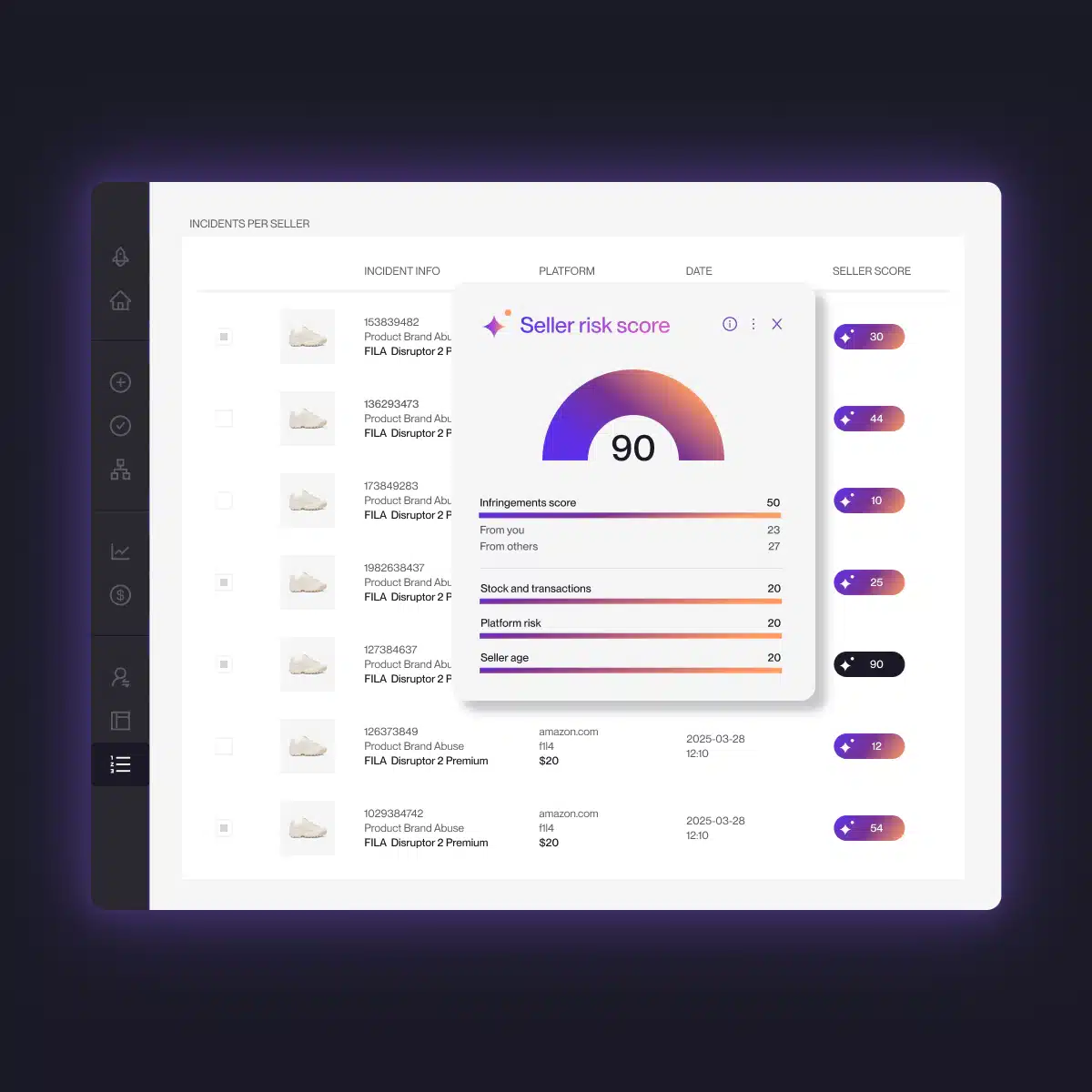
Red Points’ bot-powered search continuously scans linking sites, cyberlockers, apps, social platforms, streaming services, and P2P networks for unauthorized use of your content. For logos specifically, the platform uses logo recognition technology to identify your mark in images regardless of form, location, or modification — and machine learning continuously improves the precision of each search.
Remove
Detected infringements are compiled into a review list. You can validate them manually or automate the process based on rules you define. For brands that want less hands-on involvement, Red Points’ IP specialists manage the full enforcement cycle — manual validation is optional, not required. Source: G2 reviews.
Once validated, Red Points sends de-indexing and removal requests to the relevant platforms and hosts, handling the enforcement process without requiring your team to submit every case manually.
Report
A comprehensive reporting system provides a detailed overview of your copyright protection coverage through performance dashboards and customized reports. You can track how enforcement actions are performing, identify patterns in where infringement is occurring, and use that data to inform your broader brand protection strategy.
For brands dealing with infringement across social media specifically, Red Points’ brand protection software monitors a wide range of platforms simultaneously, regularly scanning for designs, listings, and content that could infringe upon your copyrights.
What’s next
Copyright infringement steals your revenue, undermines your brand, and erodes the trust you’ve built with your customers. The good news is that between registration, visible ownership notices, proactive monitoring, and a clear enforcement process, brands have real tools to fight back.
Start with the foundations: register your copyright and trademark, add the © symbol to your work, and document everything. When you find an infringement, move quickly — gather evidence, send a cease and desist or DMCA notice, and report to every relevant platform and authority.
Frequently asked questions
Copyright infringement occurs when someone reproduces, distributes, publicly displays, or otherwise uses a copyright-protected work without the owner’s authorization. This applies to photographs, written content, logos, music, videos, and any other original creative work in a tangible form. It doesn’t matter whether the infringer is aware of the violation — unauthorized use is infringement regardless of intent.
No. In most cases, copyright protection exists automatically the moment you create an original work in a tangible form, with no registration required. However, registering with the U.S. Copyright Office creates a public record of ownership and significantly strengthens your position in any legal enforcement action. It’s also a prerequisite for pursuing statutory damages in the US courts.
Copyright protects original creative works, such as photos, writing, logos as artwork, and videos. Trademark protects brand identifiers — names, slogans, logos as brand indicators — and gives the owner exclusive rights to use those identifiers in commerce.
A logo can be protected by both simultaneously. Slogans and brand names, however, are not protectable by copyright and require trademark registration instead. You can register a business trademark through the USPTO.
A DMCA takedown notice is a formal request under the Digital Millennium Copyright Act that notifies an online platform or web host that their user is hosting copyright-infringing content and demands its removal. It must include your contact information, identification of the copyrighted work, specific URLs of the infringing content, a good-faith statement that the use is unauthorized, and a statement of accuracy under penalty of perjury, signed with your full legal name.
A cease and desist letter is a broader enforcement tool that can address copyright infringement, trademark infringement, harassment, and other violations. It is addressed directly to the infringer.
A DMCA takedown notice is specifically designed for online copyright infringement and is typically submitted to the platform or host where the infringing content appears, rather than directly to the infringer. When dealing with spoof websites or infringing social media accounts that also involve trademark violations, a C&D is usually the more appropriate starting point.
Logo copyright infringement occurs when someone uses a logo — or a critical component of it, such as its shape, color scheme, or distinctive styling — without the owner’s authorization. This includes unauthorized use, reproduction in any form, and modification.
Logos are protected both as artistic works under copyright law and, if registered, as brand identifiers under trademark law. Displaying the © symbol next to your logo and registering it with both the U.S. Copyright Office and the U.S. Patent and Trademark Office provides the strongest combined protection.
Ideas, concepts, and non-tangible works are not covered. Neither are slogans, brand names, or other brand identifiers, which require trademark protection, or content that has entered the public domain.
Manual searching — on social media, marketplaces, and search engines — can surface some infringements, but it’s impossible to cover the full scope of the internet this way. Google’s reverse image search can help identify stolen photographs. For scalable, ongoing monitoring, automated tools like Red Points scan the web continuously and flag potential infringements for review.
Yes. If you cannot get infringing content removed at source, you can submit a Google copyright removal request to have the URL de-indexed from search results. This prevents consumers from finding the infringing content organically, even if the content itself remains on the web.
In most cases, copyright lasts for the creator’s entire lifetime plus 70 years. For anonymously published works, the protection period is 95 years from the date of publication. After expiration, the work enters the public domain and can be freely used by anyone.